RFID inventory management for businesses in Indonesia
Connect physical goods with inventory records using UHF RFID tags, readers, and software. Katalyst helps plan stock counts and movement capture around your warehouse, store, or factory workflows.
An example stock audit workflow with Katalyst apps
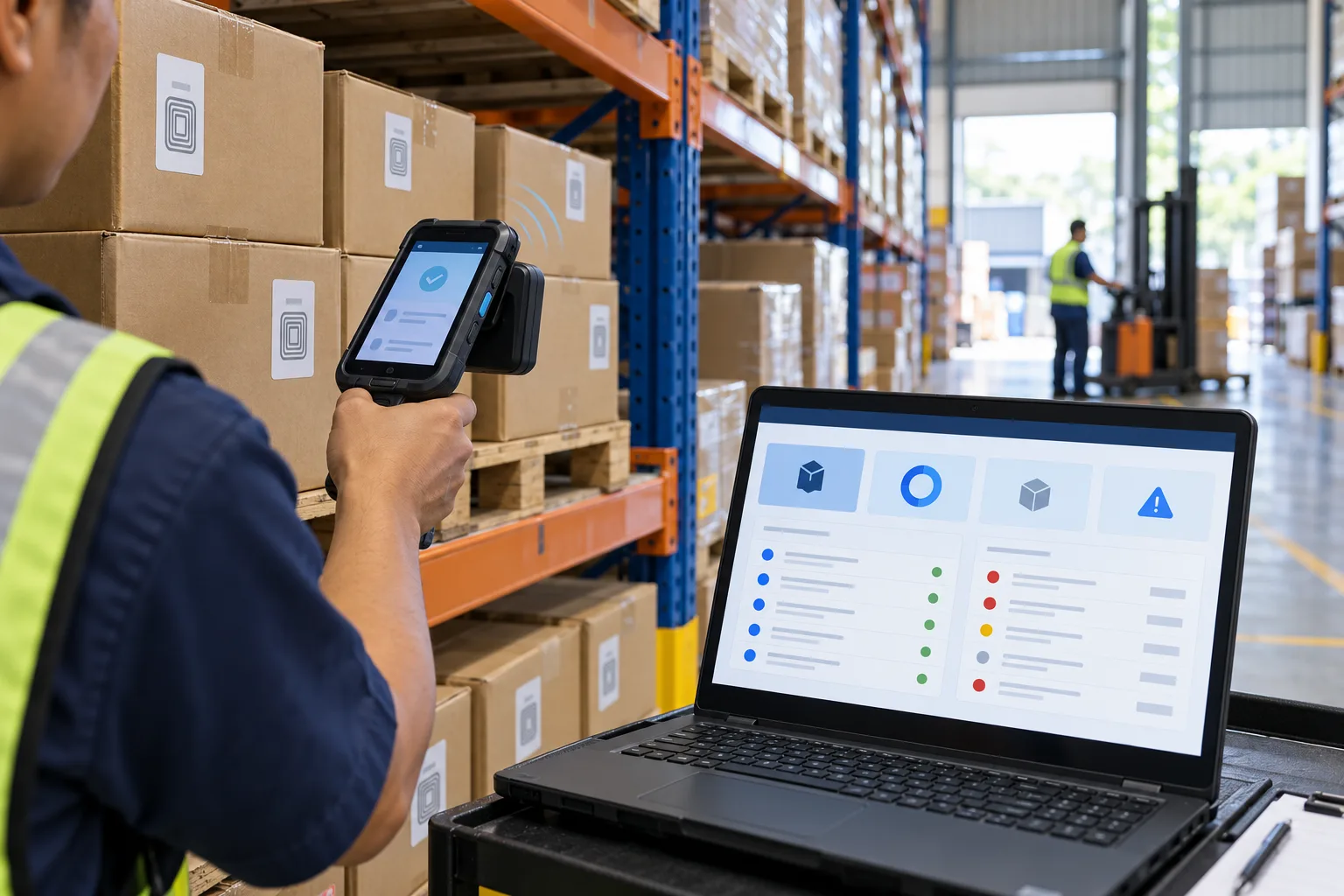
Katalyst Scanner supports RFID reading and audit review on the handheld. Katalyst Inventory provides stock audit pages for comparing reads with inventory records. The exact workflow and integration are scoped during implementation.
What is RFID inventory management?
Inventory management covers goods from receiving and storage through transfers and dispatch. Records of quantity, identity, and location help teams check availability and investigate discrepancies.
UHF RFID helps collect tagged item identities without scanning each barcode directly. Reads must be mapped to product records and validated before becoming inventory transactions. Purchasing, inventory valuation, and accounting remain within the agreed scope of your ERP or other systems.
Choosing barcode or UHF RFID for inventory
| Requirement | Barcode | UHF RFID |
|---|---|---|
| Reading items | Labels are scanned individually and must be visible | Multiple tags can be read within reader range |
| Preparation | Labels and scanners suited to the existing process | Tags, readers, identity mapping, and read zone testing |
| Item conditions | Readability depends on label condition | Metal, liquids, and tag placement affect results |
| Suitable workflows | Useful when individual scanning meets your needs | Consider for bulk counts or checking many items |
Plan the inventory workflow with your team
- 01
Receive and identify
Decide whether to tag items, cartons, or pallets. Link each tag ID to its product and receiving records.
- 02
Record movements
Define reading points for transfers or dispatch. Validate reads against transaction documents within the implementation scope.
- 03
Count and reconcile
Count by zone, compare reads with stock records, and investigate unread items or location differences.
- 04
Approve and sync
Assign responsibility for adjustments. Send approved results to the target system through an agreed API or file exchange.
Requirements and cost factors
Tags and hardware
The number of tagged items, item materials, operators, and read points determine tag and reader requirements.
Software and data
Prepare product masters, ID mapping, storage zones, and reconciliation rules. Agree on required functions before implementation.
ERP or WMS integration
Connecting Odoo, SAP, Accurate, or internal systems requires assessment of APIs, data formats, permissions, and sync direction.
Pilot and support
Budget for sample testing on site, training, and support within the project scope. Request a quote based on actual requirements.
Explore your inventory requirements
RFID stock counts
Stock counting and discrepancy checks by zone.
Warehousing and distribution
Plan reads during receiving, transfers, and dispatch.
Retail
Review item counting requirements in stores and stockrooms.
UHF RFID solutions in Indonesia
Explore Katalyst hardware, services, and implementation approach.
RFID inventory management questions
Does RFID replace ERP or inventory software?
Not always. RFID collects physical item identities. Purchasing, replenishment planning, valuation, and accounting can remain in your ERP. Responsibilities are defined during assessment.
How much does implementation cost?
Costs depend on tag quantities and types, readers, software scope, integration, and site requirements. Prepare sample items, location counts, and workflows for an itemized quote.
Is stock always updated in real time?
Updates depend on when goods are read, connectivity, transaction validation, and sync schedules. Passive tags do not continuously transmit their location. Define update requirements for each workflow.
When is barcode enough?
If your team can handle the scan volume, labels are accessible, and the process meets your needs, barcode can remain in use. Pilot RFID on a process with measurable problems before expanding.
How do we start a pilot?
Select one zone or item type, prepare reference stock records, and test tags and readers under operating conditions. Measure count time, unread tags, and discrepancies after reconciliation.
Inventory management and RFID guides
RFID Inventory Management Indonesia: Complete Buyer's Guide 2026
Everything to consider before buying an RFID inventory system in Indonesia: rollout scope, site assessment, vendor selection, and factors that affect implementation timing.
RFID vs Barcode: Which Is Right for Your Warehouse?
A full comparison of RFID and barcodes: speed, accuracy, and use cases. Find out which fits your warehouse operations best.
How to Implement RFID in Your Warehouse, Step by Step
A complete guide to implementing RFID from scratch: site assessment, hardware selection, tag encoding, software setup, team training, and go-live. Avoid the most common mistakes.
What Is UHF RFID? A Complete Guide for Businesses
Learn the fundamentals of UHF RFID: how it works, and why businesses are switching from barcodes to RFID for inventory management.
Plan inventory that is easier to verify
Tell us about your items, locations, stock counts, and existing systems. We will help review the scope and next steps.
Discuss your inventory needs