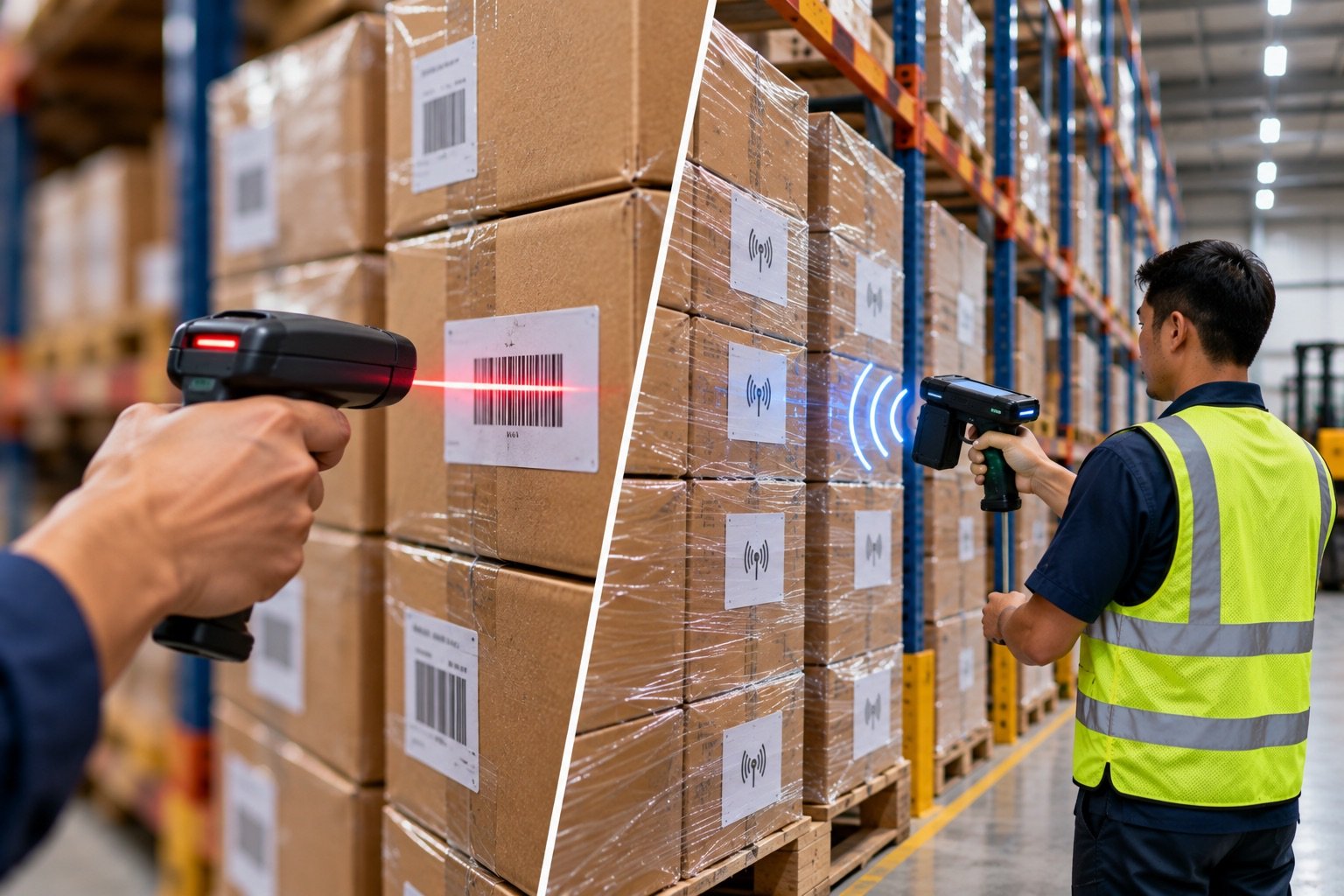
Barcode: The Technology We All Know
Barcodes have been the standard for product identification for decades. They are cheap, simple, and universally understood. But are barcodes still enough for a modern warehouse?
A Direct Comparison
| Aspect | Barcode | UHF RFID |
|---|---|---|
| Scan speed | 1 item per scan | Multiple tags can be read together; throughput depends on equipment and conditions |
| Read distance | < 30 cm, requires line of sight | Varies by reader, tag, item, and site conditions |
| Bulk scanning | ❌ One by one | ✅ Hundreds at once |
| Individual tracking | ❌ SKU level only | ✅ Unique ID per item (EPC) |
| Durability | Easily damaged (wet, torn) | Water and impact resistant |
| Automation | Manual scan required | Fully automatic with fixed readers |
When to Stick with Barcodes
- Retail POS: Barcodes are already integrated with most POS systems
- Low volume: Fewer than 100 SKUs with minimal movement
- Simple needs: Printed barcode labels are enough to identify items by SKU
When to Upgrade to RFID
- Stock counts take more than a day: RFID may help shorten the process; measure the impact in an on-site pilot
- Items frequently go missing: Tracking each individual item with RFID helps prevent shrinkage
- Multiple warehouse zones: RFID makes tracking movement between areas effortless
- High value items: Jewelry, electronics, expensive raw materials
- High throughput: Thousands of SKUs moving quickly
- Automation needed: Fixed readers record outbound shipments automatically
The Hybrid Approach
Many operations use a hybrid strategy: barcodes for POS and retail checkout, RFID for warehouse management. The Katalyst platform supports dual identification (barcode and RFID) on a single item, giving you the best of both.
Request your RFID scope or schedule a free demo to see how the transition would work in your warehouse.